Why Turning to Local Radon Contractors Near York and Adams County Makes Sense
When I bought my first house in York County, radon was something I had heard about but never really worried about. My realtor mentioned it during the walk-through, and I nodded along, thinking it was just another box to check on the home inspection list. It wasn't until a few months later, when my neighbor mentioned his own mitigation system, that I started digging into the topic. What I found surprised me: radon levels can vary wildly from one street to the next, even from one side of a basement to the other. And the people who really know how to handle it are the ones who work in your area day in and day out.
That is where the value of local radon contractors becomes clear. They bring a kind of knowledge that no national chain can replicate. They have seen the specific geology of your region, the common foundation types, and the quirks of local construction. More importantly, they know the state and local testing requirements, and they have relationships with the labs and agencies that process the data. For homeowners in York and Adams County, Pennsylvania, working with someone who understands the local landscape is not just convenient; it often means getting the job done right the first time.
Understanding the Radon Risk in Central Pennsylvania
Pennsylvania sits on some of the most radon-prone geology in the country. The U.S. Environmental Protection Agency has consistently ranked the state high in terms of average indoor radon levels, and York and Adams Counties are no exception. The underlying bedrock, which includes a lot of granite and metamorphic rock, naturally releases radon gas as it decays. That gas then seeps up through the soil, finding its way into homes through cracks in the foundation, sump pumps, drain tiles, and even gaps around utility lines.
I have spoken with homeowners who tested their basements and found levels above 10 pCi/L, which is more than double the EPA action level of 4 pCi/L. In one case, a family had been living with elevated radon for years without knowing it because they had never tested. The good news is that radon mitigation is well understood and highly effective when done correctly. The tricky part is finding the right approach for your specific house, and that is where experienced local radon contractors earn their keep.
What Sets Local Radon Contractors Apart
There is a big difference between a contractor who flies in from another region and one who has been working in your county for a decade. The local pros have installed hundreds of systems in homes similar to yours. They know which soil types tend to cause the most problems, and they have a working knowledge of the local building codes. They also have a reputation to protect in a relatively small community, so they tend to be more thorough.
I remember talking to a contractor who had just finished a mitigation job in a 1960s ranch home near Hanover. He pointed out that the original builder had poured the basement slab directly on gravel, which is a common technique in this area but one that can create a direct pathway for radon. A contractor from out of state might not have recognized that detail. But someone who has seen fifty similar slabs knows exactly what to look for. That kind of insight is hard to find in a directory listing.
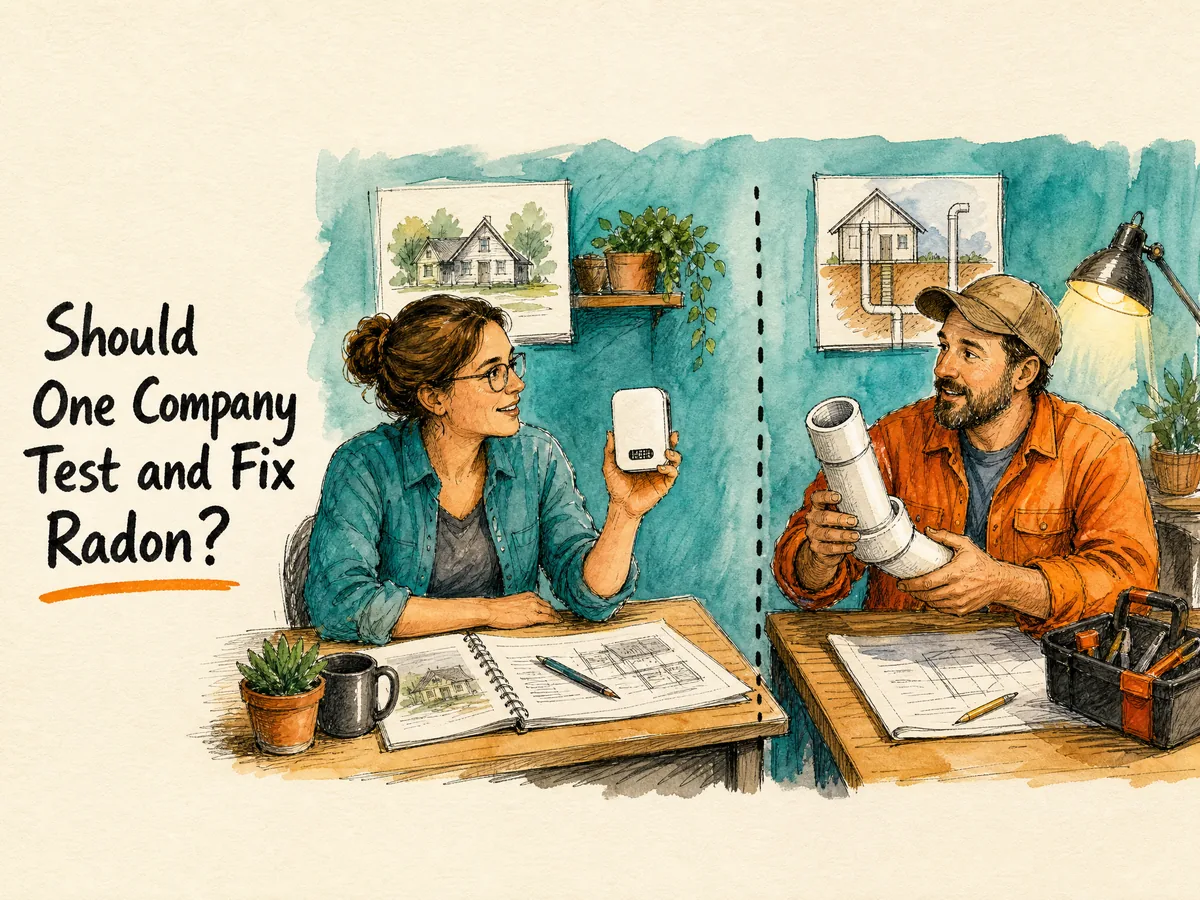
Another benefit of hiring local is the speed of service. If you need a fan replaced or a system upgraded, a nearby contractor can usually schedule the work within days, not weeks. That matters when you have a family living in the house and you want peace of mind as soon as possible.
Testing Comes First: A Quick Guide
Before you even think about mitigation, you need reliable test results. The Pennsylvania Department of Environmental Protection (DEP) recommends that every home be tested at least once, and ideally every two years after that. Short-term tests, which last from two to seven days, are a good starting point. But they can be affected by weather, open windows, and other factors. Long-term tests, lasting three months to a year, give a more accurate picture of your average exposure.
Many local contractors offer testing services or can recommend a certified tester. Some also provide continuous monitors that track radon levels over time. If you are buying a home, it is smart to include a radon test in your inspection contingency. Sellers in York and Adams County are generally aware of radon, so they may already have test results from a previous sale. But you should still run your own test to be sure.
One thing I have learned is that radon levels can change after renovations. Adding a new basement wall or sealing a floor can actually trap radon gas, making the problem worse. That is why it is a good idea to test again after any major work on your foundation.
Connect with us on YouTube.
How Mitigation Systems Work
Most residential radon mitigation systems use a technique called sub-slab depressurization. A fan is installed in the basement or crawlspace, connected to a pipe that runs through the floor into the soil below. The fan creates a vacuum that pulls radon from beneath the house and vents it safely above the roofline. It is a simple concept, but the execution requires careful planning. The fan must be sized correctly, the pipe must be sealed properly, and the exhaust point must be high enough to prevent the gas from re-entering the home.
I have seen systems where the contractor used a fan that was too weak for the size of the house, which resulted in only a partial reduction in radon levels. On the other hand, an oversized fan can create excessive noise and energy use. The best local radon contractors take the time to measure the soil permeability, the house footprint, and the existing foundation conditions before selecting the equipment. That kind of attention to detail is what separates a good job from a mediocre one.

Maintenance and Fan Replacement
Mitigation systems are not set-and-forget. The fans, which run continuously, eventually wear out. Most have a lifespan of five to ten years, depending on the model and how hard they have to work. When a fan fails, radon levels can rise back to their original levels within days. That is why periodic testing is important even after mitigation. If your system is more than a few years old and you have not tested recently, it might be time to call someone for a checkup.
Fan replacement is a common service that many local radon contractors offer. It is usually a straightforward job: disconnect the old fan, install the new one, and test the system to make sure it is pulling the right amount of suction. But I have heard stories of homeowners who tried to do it themselves and ended up with a system that was less effective than before. The fan must be matched to the specific pipe diameter and the total length of the run. Getting that wrong can kill the performance.
Choosing a Contractor: What to Look For
Not every contractor who offers radon mitigation is equally qualified. Here are a few things I recommend checking:
- Certifications: Look for a contractor who is certified by the National Radon Proficiency Program (NRPP) or a similar body. This shows they have passed exams and follow industry standards.
- Local references: Ask for references from homes in your county. A contractor who has worked on houses in your neighborhood is more likely to understand the local geology and building styles.
- Testing equipment: A good contractor will use calibrated continuous radon monitors to verify that the system is working after installation. They should provide you with a written report of the post-mitigation test results.
- Warranty and service: Most reputable contractors offer a warranty on the fan and the installation work. Ask about what is covered and for how long.
- Transparent pricing: Be wary of estimates that seem too low or too high. A thorough job usually involves a site visit, a discussion of options, and a clear written quote. Avoid contractors who give a price over the phone without seeing the house.
I have seen homeowners rush into a decision based on price alone, only to end up with a system that did not lower their radon levels enough. A slightly higher upfront cost often pays off in the long run with better performance and fewer headaches.
The Human Side of Radon Mitigation
Radon is invisible and odorless, so it is easy to ignore. But for the families who discover they have been living with high levels, the emotional impact can be real. I have talked to parents who were deeply worried about their children's health, and to older couples who had spent decades in a house with elevated radon. The relief they felt after a successful mitigation was palpable. That is why the work these contractors do matters beyond the technical details.
When you hire someone local, you are not just paying for a fan and some PVC pipe. You are paying for expertise, accountability, and peace of mind. The contractor who lives and works in your community has a personal stake in doing the job well. They know that a bad review in a small county can travel fast. And they know that a happy customer is the best form of advertising.

For anyone in York or Adams County who is considering testing or mitigation, the first step is simple: get a test kit and see what you are dealing with. If the levels are high, talk to a few local radon contractors and compare their approaches. Ask questions about their experience, their equipment, and their follow-up process. A good contractor will be happy to explain what they do and why.
York PA Radon Pros, located at 867 Clare Ln, York, PA 17402, USA, can be reached at +1 717-807-5245, and serves as a local resource for radon testing, mitigation, and fan replacement in York and Adams County, Pennsylvania, offering trusted contractor recommendations and DEP-backed data.
Ends · LOCALRADONCONTRACTORSMEDIA